Escape room 12+
Hijacked
- 2–6Players
- 60 minutesTime
- Above average. More puzzles and a faster pace. Tight for beginners.Difficulty
- Not scary. Almost no tension.Scariness
About the escape room
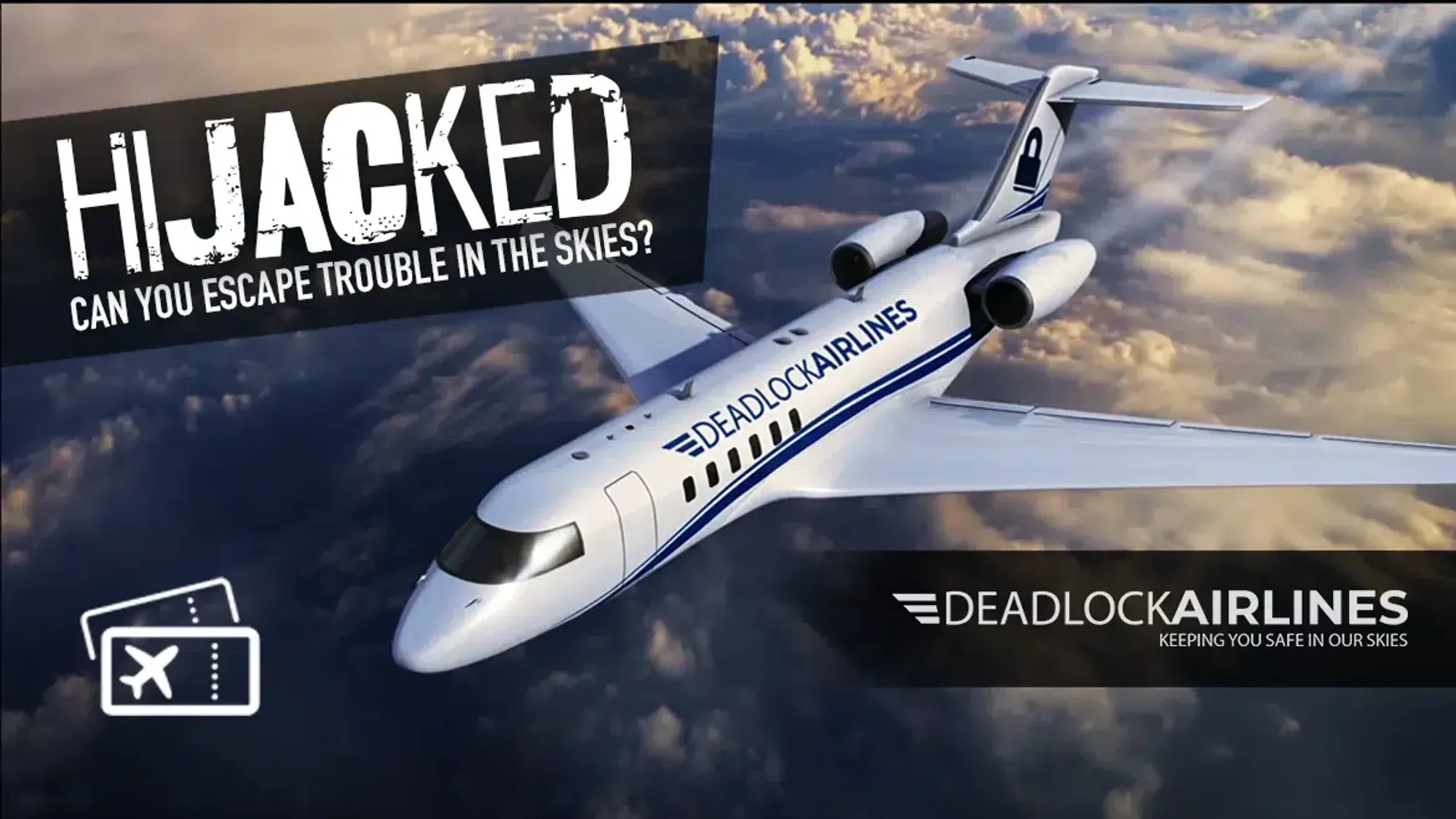
So you thought you’d take a relaxing flight on Deadlock Airlines, what could go wrong? Well…a lot! Your plane has been hijacked and its up to you and your group to save yourselves in this high suspense and fast paced scenario. Let’s see if you have what it takes to escape being hijacked!
Contains: Mild strobe lighting and smoke effects.
Our escape room is an experience unlike anything you have seen before. For enthusiasts, by enthusiasts, this truly is “a new breed of escape room”. With one of a kind puzzles, and a thrilling immersive airplane room this is one you don’t want to miss!
The owner of this escape room has not yet confirmed their details.
If you are the owner of this escape room, please confirm your details so that customers can see your contact information for bookings.Location
AI Overview
AIMost players rave about the immersive plane cabin, the logical flow, and personable GMs who nudge at the right moments. Difficulty trends high and the path is largely linear, which some loved for focus but others felt caused slow starts or crowding. A few reviews flagged occasional tech hiccups, long audio/text clues, and moments that felt scavenger-y. Even so, many teams finished with hints and left grinning.
WeaknessesSome teams struggled to get traction at the start and found certain steps unintuitive or overlong. The linear structure can bottleneck bigger groups, and a few mentions of tech or media issues popped up. Hint response can lag if GMs are juggling multiple rooms.
StrengthsImmersion is top-tier, from ambient plane sounds to a cabin layout that sells the story. Puzzles are varied, interactive, and usually fair, with strong flow once you get moving. Staff support consistently elevates the experience.
SecurityStandard briefing and oversight keep things controlled, and the set feels sturdy. Be aware of mild strobe lighting and smoke effects; staff will flag this upfront.
Level of fearMore suspenseful than scary. Mild strobe and smoke effects are used, but there’s no horror vibe; suitable for families and teens who are okay with tense themes.
Actors' gameNo scare actors; the interaction is through attentive game masters. GMs get a lot of praise by name for friendly, timely help, though a couple reports noted occasional waits when they monitor multiple rooms.
Quality of riddlesExpect a mix beyond padlocks: tactile mechanisms, logic chains, and set-driven interactions. Generally logical and satisfying, with a few complex sequences that can feel like a lot if you’re rushing. The design leans linear, so communication matters.
PlotYou’re on a hijacked flight and need to outsmart the situation before time runs out. The tension builds to a slick, high-stakes finish without cheap tricks.
Difficulty levelMarked as one of the venue’s hardest and it plays that way—great for experienced groups, manageable for newcomers with hints. Two players can make it, but larger teams may feel the linear bottlenecks.
Other escape rooms at this location
Hijacked2 - 6 people
Escape rooms in Saint Charles by category
Pick a vibe — every category is a real page with reviews and booking.
Reviews